
The Best Fishing Rod For Beginners for 2026
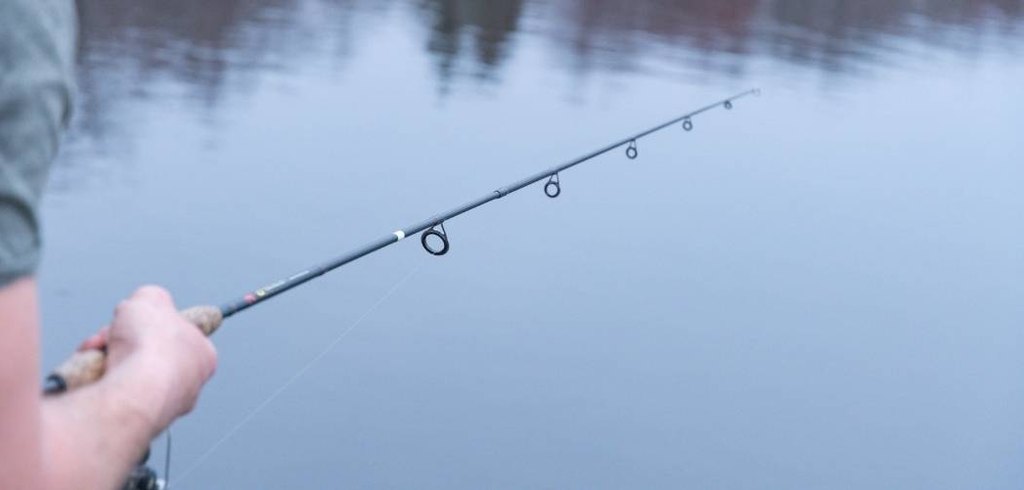
The best fishing rod for beginners must be easy to use, not cost the earth yet still be of sufficient quality.
When choosing the best fishing rod as a beginner, it's important to choose one that matches your fishing style.
This is because different rods have different attributes to suit different disciplines.
For example, a rod suitable for float fishing on a lake will not be suitable for sea fishing from the shore.
This article will take you through everything you need to know to make an informed choice on the best fishing rod for your specific circumstances.
We'll explain the different types of fishing rods available to you as well as the features that make up the best fishing rod for beginners.
Quick Answer
The Sonik Xtractor Carp Rod is my top pick for a first carp rod because it is affordable, forgiving and genuinely capable, the rod I would hand a newcomer starting on carp.
The table below sorts the rods by the kind of fishing each one suits, from carp and float to feeder, lure, sea and fly, so a beginner can match the rod to the fishing they want to try.
| Rank | Best for | Rod | Best suited to |
|---|---|---|---|
| #1 | Best for Carp | Sonik Xtractor Carp Rod | Beginners fishing small lakes and margins who want a short, forgiving carp rod for easy casting and carrying. |
| #2 | Top for Float Fishing | Leeda Float Rod | Newcomers to coarse fishing who want an affordable carbon float rod to learn trotting and waggler work on. |
| #3 | Top for Feeder Work | Zebco Ambition Feeder Rod | Anglers learning feeder fishing who want a soft, forgiving rod in a size range from small commercials to open water. |
| #4 | Great for Lures | NGT Dynamic Spin Rod | Beginners taking up lure fishing for perch and small pike who want a light 8ft rod rated for everyday spinners and soft plastics. |
| #5 | Top for Sea | Shakespeare Firebird Beachcaster | Casual and holiday sea anglers who want an affordable, easy-casting beachcaster to learn shore fishing on. |
| #6 | Great for Fly | Snowbee Classic Fly Rod | Beginner fly anglers after one affordable rod, with a 9ft #6/#7 covering stillwater trout and lighter ratings for small streams. |
| #7 | Best All-Rounder | NGT Dynamic Travel Carp Rod | Anglers wanting one versatile pack-down carp rod, an 11ft 2.75lb blank that folds to 88cm for holidays and travel. |
What Are The Different Types Of Fishing Rod?
There are many different types of fishing rods available to buy and choosing the correct rod type can sometimes be a minefield particularly if you are new to the sport.
The best fishing rod for beginners can only be chosen if you know what type of fishing you will be conducting.
In the UK, there are generally 3 broad types of angling you are likely to be practicing and these are:
- Coarse Fishing
- Sea Fishing
- Fly Fishing
Within these fishing types, there are different tactics that can be deployed to catch a certain species or to fish from a certain spot or in a specific way. To choose the best type of fishing rod you will need to decide on what tactic you wish to deploy.
These can be explained by breaking the different fishing types down further.
Coarse Fishing Rods
Coarse fishing in the UK has many tactics that anglers deploy and depending on what tactic you use will depend on what type of fishing rod is best for you.
Float Fishing Rods
Float fishing is probably the most common tactic of coarse fishing and dates back to 1496. Float fishing rods tend to be longer than those used for ledgering and are usually found in lengths between 10 and 14 feet.
Float fishing rods are sometimes called waggler rods or match rods with all terms meaning the same.
Float rods are a lot lighter than the more heavy-duty ledgering types and have a more 'whippier' action to them.
The best fishing rod for beginners when float fishing, ideally needs to be 11 or 12 feet in length. It should also be both light enough to balance well with the float reel and the lighter line used with the tactic.
However, it must also be strong enough to absorb lunges from larger fish that perhaps beginners wouldn't predict.

A float fishing rod in action. Image courtesy of Tackle UK.
Feeder Fishing Rods
Feeder fishing is a ledgering tactic that uses a swim feeder as a weight to cast out.
There are many types of swim feeder and methods used within this style of coarse fishing.
The best fishing rod for beginners when feeder fishing should be between 10 and 12 feet in length and be strong enough to cast the weight of the fully-loaded feeder you are using.
Weights can exceed 4 ounces if you are using a heavy ground bait in a large feeder so the feeder rod you choose must but be able to withstand the forces of casting this weight.
Another key consideration when choosing a feeder rod is that it has a decent quiver and/or swing tip attached to it. This is the main form of bite indication on a feeder rod and, as such, needs to be strong yet subtle and easily seen.
Check out this video that gives some more information on choosing a feeder fishing rod for beginners:
Carp and Pike Ledgering Rods
Similar to Feeder fishing rods, the best fishing rod for beginners when Carp or Pike fishing tend to be between 10 and 12 feet and need to be strong.
Carp and Pike can grow large and they also fight very hard and, as such, a suitable rod is important if you are going to have success in catching them.
There are many types of carp and pike fishing rods on the market.
These vary in length, action, and test curve.
We have dedicated articles on carp fishing rods and pike fishing rods that explain in more detail the key features and requirements of these rods.
Sea Fishing Rods
Similar to coarse fishing, the best fishing rods for beginners when sea fishing depends on the tactic you deploy.
These tactics are often dictated to you automatically. For example, if you have no boat and can only fish on the shore, then you will naturally need a beach casting rod.
If you have a boat then you may require a boat fishing rod or maybe a spinning rod.
We have a full, detailed article on the different types and features required of the best sea fishing rods here.
Beach Casting Rods
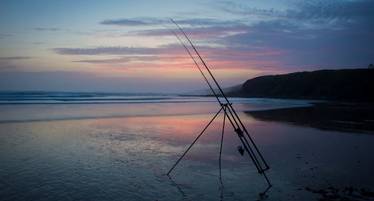
Beach casting rods are designed to fish from the shore. For this tactic to be effective you have to cast fairly long distances to get past the point where the waves break.
Beach casting rods, therefore, have to be long and strong usually at 12-foot lengths plus.
The rods usually will rest high on a tripod with the tips often coloured and easily visible to be able to see bites.
As a beginner, you don't have to break the bank when purchasing a beach casting rod as strength and power are the main features required.
Quite often it's slim and lightweight blanks that add cost to a fishing rod and these just aren't required when beach casting.
Boat Fishing Rods
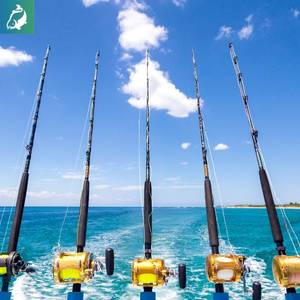
When picking a boat fishing for as a beginner, quite simply you need it to be fairly short in length and very strong in order to handle some big fish.
Quite often boat fishing rods are paired with multiplier reels as the retrieve rate is a lot faster and is more efficient in very deep water.
You normally wouldn't need to cast long distances with boat fishing rods so the power needs to be in the retrieval and not the cast.
Spinning Rods
Spinning rods are used for lures and artificial baits. Again, when looking for a spinning rod as a beginner, you really don't have to spend a fortune.
Spinning rods for sea fishing are pretty much the same as you would use for pike or predator fishing.
The best spinning rods tend to be 11-12 feet in length with a medium action to them.
Fly Fishing
Fly fishing is a specialised skill that differs from the more conventional type of angling.
Different fly fishing rods will cater to the different water types you are fishing.
For example, fly fishing on a reservoir will require a different type of rod than fishing on a stream.
The best fishing rod for beginners when fly fishing are quite often those that come in a beginner-style kit.
These kits are great for those that are just taking up the sport as they are great value for money and allow you to trial fly fishing without having to invest in lots of expensive tackle.
How do I know what fishing rod to get?
As a beginner, to know what fishing rod to get, you need to decide on what discipline you are going to practice as described above.
Once you have decided on this, you can check out our options below as they have been carefully chosen as the best fishing rod for beginners for each type of fishing style.
What Features To Look For In The Best Fishing Rod For Beginners?
When deciding on the best fishing rod for beginners, there are certain features that need to be considered to ensure you pick the right rod.
The important features to consider are as follows:
- Rod length
- Rod action
- Rod Material
- Number of eyes
- Reel Seat
- Handle material
- Blank Weight
- Number of sections
- Price
What Size Rod Is Best For Fishing?
When deciding upon the best fishing rod for beginners, rod length is one of the important features to get right.
This can be a minefield in itself as quite often similar rods come in different lengths.
To make this difficult decision easier, we have devised the following table that shows what the optimum rod length is for different fishing situations:
Table To Show Optimum Fishing Rod Length
| Fishing Type | Shortest Length To Use | Longest Length To Use | Best Rod Length For Beginners |
|---|---|---|---|
| Float Fishing For Coarse Fish | 10 Foot | 14 Foot | 11 Foot |
| Feeder Fishing | 10 Foot | 12 Foot | 12 Foot |
| Carp Fishing (Ledgering) | 10 Foot | 12 Foot | 12 Foot |
| Carp Fishing (Stalking) | 6 Foot | 10 Foot | 9 Foot |
| Carp Fishing (Spod Rod) | 11 Foot | 14 Foot | 12 Foot |
| Carp Fishing (Surface Fishing) | 10 Foot | 13 Foot | 12 Foot |
| Pike (Deadbait Fishing) | 10 Foot | 12 Foot | 12 Foot |
| Pike (Spinning) | 7 Foot | 11 Foot | 9 Foot |
| Sea (Beach Fishing) | 12 Foot | 16 foot | 13 Foot |
| Sea (Boat Fishing) | 7 Foot | 9 Foot | 7 Foot |
| Sea (Spinning) | 7 Foot | 11 Foot | 9 Foot |
| Fly Fishing | 8 Foot | 11 Foot | 9 Foot |
The Best Fishing Rod For Beginners Reviewed
Sonik Xtractor Carp Rod
#1 Best for Carp
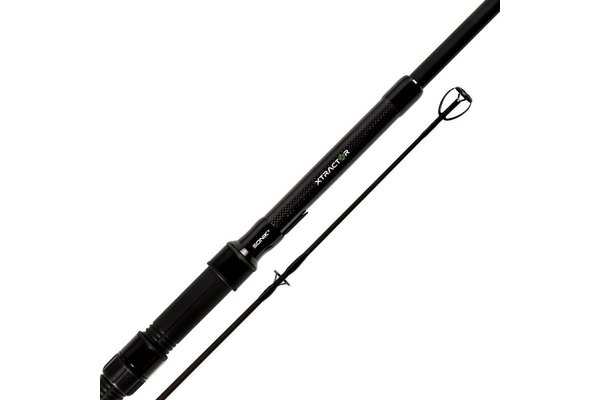
At 9ft or 10ft the Xtractor is one of the shortest carp rods I'd hand a beginner, and that's exactly why it works. A short blank is easier to control on the strike and far less unwieldy than a full 12ft rod when someone is still learning to cast.
The blank is a slim matt black carbon with a progressive power action, so it bends through smoothly rather than fighting back. For margin work, small lakes and short casts to a nearside feature, that forgiving action does a lot of the work for a new angler.
It's sensibly finished too. The 17mm DPS reel seat takes any reel, the Japanese shrink rubber handle keeps a grip in the wet, and the anti-frap ceramic tip ring and M-Series guides are there to shrug off knocks. The 9ft packs down to 113cm, which suits a small car or a walk to the swim.
What it isn't is a distance tool. A short rod with this action won't punch a lead to the horizon, so anyone fishing big pits at range will outgrow it. As a first carp rod for close-in fishing though, it's hard to fault.
Best suited to
Beginners fishing small lakes and margins who want a short, forgiving carp rod for easy casting and carrying.
Pros
- Short blank is easy to cast and control
- Progressive action forgives beginner mistakes
- Packs down short for carrying and small cars
Cons
- Not built for long-range casting on big pits
- Short length limits line control at distance
Leeda Float Rod
#2 Top for Float Fishing

Float fishing is where a lot of anglers start, and the Leeda Float Rod is built squarely for that first season. It sits in Leeda's budget coarse range, so it's about getting a workable rod in hand rather than chasing top-end components.
The blank is carbon with a plain matt finish, which keeps the weight sensible for a style that means holding and trotting the rod for long spells. For running a float down the peg for roach, rudd and skimmers, that matters more than anything fancy.
Leeda pitch the range at novice and beginner anglers, and I think that's an honest read of it. The components are good enough to learn on without the rod feeling like a throwaway, which is the balance a first float rod needs to strike.
I won't pretend it's a match angler's tool. Anyone chasing fine-tuned tip actions and premium rings will want to trade up before long. As an affordable way into float and coarse fishing, it does the job it's meant to.
Best suited to
Newcomers to coarse fishing who want an affordable carbon float rod to learn trotting and waggler work on.
Pros
- Light carbon blank suits holding and trotting
- Budget-friendly way into float fishing
- Good enough to learn on, not a throwaway
Cons
- Components are entry level, not match grade
- Keen float anglers will want to upgrade
Zebco Ambition Feeder Rod
#3 Top for Feeder Work
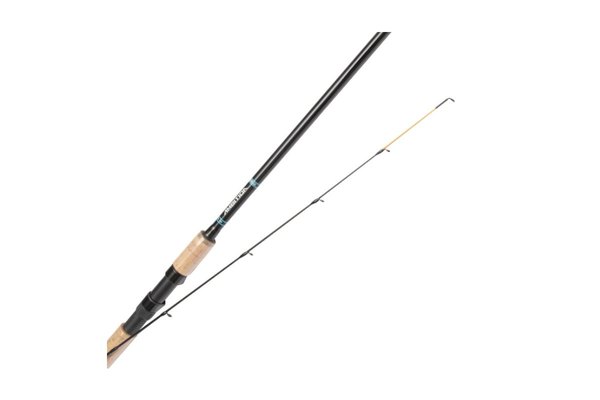
Zebco built the Ambition to cover modern float and feeder work, and for a beginner taking up feeder fishing that broad remit is a strength. It comes in a spread of sizes from a 10ft 60g up to a 13ft 160g, so there's a match for small commercials right through to bigger open water.
The action is parabolic, meaning it bends deep into the blank under load. For someone still learning to play a fish, that soft, cushioning curve is forgiving and helps keep hooks in on the lighter lines feeder anglers tend to use.
The full cork handles are a nice touch at this money. Cork stays warm and grippy through a long session, and it's more pleasant to hold than the cheap EVA a lot of budget rods use.
A parabolic entry rod does have limits. It's not the crisp, fast tool a distance feeder specialist would pick, and the softer casting weights suit ponds more than big rivers. For learning feeder fishing though, I rate how easy it is to get on with.
Best suited to
Anglers learning feeder fishing who want a soft, forgiving rod in a size range from small commercials to open water.
Pros
- Parabolic action is forgiving on light lines
- Full cork handles stay comfortable over long sessions
- Size range spans small commercials to open water
Cons
- Softer action lacks the crispness of a distance rod
- Not built for heavy leads on big rivers
NGT Dynamic Spin Rod
#4 Great for Lures

A 6 to 25g casting range covers most of the lures a beginner will actually tie on, and that's the first thing I check on a starter spinning rod. The NGT Dynamic Spin sits right in that useful band, so small spinners, spoons and soft plastics for perch and pike all fall comfortably within it.
It's an 8ft two-piece carbon blank, which is a sensible length to learn on. Short enough to flick lures accurately under trees and along margins, long enough to work a lure and set a hook, without the tip-heavy feel of a longer rod.
NGT fit it with Fuji guides and send it out in a neoprene sleeve, which is more than I'd expect at this end of the market. Fuji rings are a dependable choice and the sleeve means it travels without getting knocked about.
The trade-off is range. One 6-25g rod can't cover both tiny drop-shot lures and big pike jerkbaits, so a committed lure angler ends up with more than one. As an affordable first spinning rod for light lure work, it's a genuinely good start.
Best suited to
Beginners taking up lure fishing for perch and small pike who want a light 8ft rod rated for everyday spinners and soft plastics.
Pros
- 6-25g rating suits most everyday lures
- Fuji guides are dependable at this price
- Compact 8ft length aids accurate casting
Cons
- Single casting band cannot cover every lure size
- Too light for big pike jerkbaits
Shakespeare Firebird Beachcaster
#5 Top for Sea
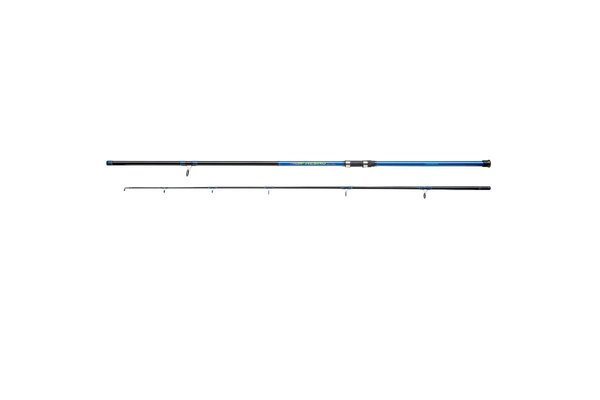
A first trip to the beach is often about just getting a bait out and enjoying the day, and the Firebird beachcaster is built with that angler in mind. Shakespeare describe it as a reliable rod that doesn't break the bank, which is an honest pitch for a beginner's shore rod.
Beachcasting means a longer, more powerful rod to launch a lead and grip bait out past the surf, and the Firebird gives a newcomer that reach without the price or the stiffness of a serious tournament blank. It's aimed at casual anglers and the holiday market, so it's forgiving to cast.
The Firebird artwork and cosmetics are part of its appeal, and it suits anglers of all ages picking up sea fishing for the first time. For occasional trips to the shore, that easygoing character counts for a lot.
I'd be straight that it's a casual rod, not a distance-casting specialist. Anyone who gets serious about clearing big surf at range will move on to a dedicated blank. For learning to fish the beach without spending heavily, it's a sound first step.
Best suited to
Casual and holiday sea anglers who want an affordable, easy-casting beachcaster to learn shore fishing on.
Pros
- Affordable route into beach and shore fishing
- Forgiving to cast for a newcomer
- Enough power to reach past the surf
Cons
- A casual rod, not a distance specialist
- Keen shore anglers will outgrow it
Snowbee Classic Fly Rod
#6 Great for Fly

Offered from #3 up to #7 and in lengths from 7ft to 10ft, the Snowbee Classic covers the ground a beginner fly angler needs from one range. A 9ft #6 or #7 is the classic all-round stillwater trout outfit, and it sits in the line-up alongside lighter ratings for small streams.
Snowbee say the Classic has proved popular both with anglers just starting out in fly fishing and with those simply after a good rod at an affordable price, and that dual appeal is the point. Matching line weight to length is half of learning fly casting, so the full spread of ratings makes it easy to pick the right one to begin on.
Fly casting is a timing skill more than a strength one, so a forgiving mid-range rod like this is the sensible place to learn it. It loads and unloads in a way a beginner can feel, which teaches the stroke faster than a stiff, fast blank would.
It's an entry rod and I'd treat it as one. A caster chasing tight loops and long distance will eventually want a crisper, higher-end tool. For learning to fly fish and covering trout on lakes and rivers, it's a genuinely capable starting point.
Best suited to
Beginner fly anglers after one affordable rod, with a 9ft #6/#7 covering stillwater trout and lighter ratings for small streams.
Pros
- Wide choice of line ratings and lengths
- Forgiving action helps teach the casting stroke
- Affordable entry into fly fishing
Cons
- Entry-level rod, not a crisp distance tool
- Keen casters will want to upgrade later
NGT Dynamic Travel Carp Rod
#7 Best All-Rounder
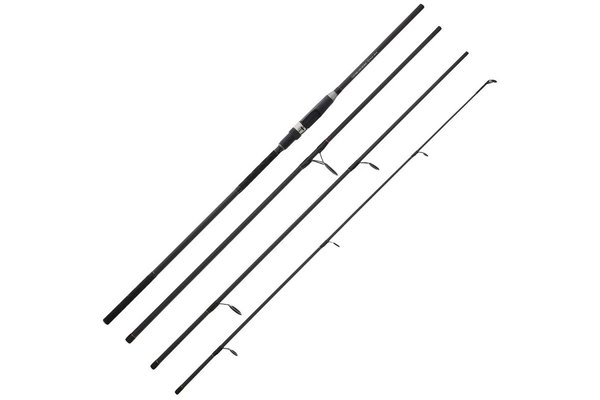
Fitting a proper carp rod into a suitcase or a rucksack is the problem this one solves. The NGT Dynamic Travel Carp is an 11ft four-section blank that packs down to just 88cm closed, short enough to go on holiday or on the back of a bike.
The spec is a genuine all-rounder. An 11ft rod with a 2.75lb test curve handles carp, but that same forgiving power covers general coarse fishing and the odd bigger fish too, so a beginner isn't locked into one style with it.
It's a carbon blank in a dark grey finish and comes in a woven bag to travel in. Four sections mean it stores tiny, and the bag keeps the pieces together and protected between trips.
The honest cost of a travel rod is the extra joints. A four-piece won't have the clean, uninterrupted feel of a one or two-piece across the whole blank, and a specialist would keep a dedicated rod at home. As the versatile rod I'd grab for travel or a first do-it-all carp setup, it earns the all-rounder slot.
Best suited to
Anglers wanting one versatile pack-down carp rod, an 11ft 2.75lb blank that folds to 88cm for holidays and travel.
Pros
- Four sections pack down to just 88cm
- 2.75lb test curve covers carp and general coarse
- Comes with a woven rod bag for travel
Cons
- Extra joints lose the feel of a two-piece
- A specialist would keep a dedicated rod too
Beginner Fishing Rod FAQs
Still choosing a first rod?
These are the questions worth settling before buying.
What is the best type of rod for a beginner?
It depends on what a newcomer wants to catch. For general coarse fishing a float or feeder rod is the easiest start, for carp a forgiving all-round carp rod like the Sonik Xtractor, and for the sea a beachcaster. Pick the rod that matches the fishing rather than one rod for everything.
What length rod should a beginner get?
Around 10ft to 12ft suits most coarse and carp beginners: long enough to cast and control a fish, short enough to handle. A float rod runs longer for line control, a beachcaster longer still for distance, and a travel rod packs down short for carrying and holidays.
Do I need an expensive rod to start fishing?
No. Every rod here is an affordable, capable starting point, and a newcomer learns far more from time on the bank than from a premium blank. A cheaper rod that gets used often beats an expensive one bought before the style of fishing is settled.
Is a rod and reel combo good for beginners?
A matched combo is a fair way in, since the reel is already balanced to the rod and there is nothing else to buy. Buying the rod alone, as here, lets a beginner pair it with a reel to suit, which is worth doing once they know the style of fishing they are settling on.
Final Thoughts
The best fishing rod for beginners needs to be the right length, the right strength, and offer the right balance for the fishing discipline you are practicing.
This article has provided you with 7 highly recommend fishing rods for beginners that won't break the bank but still absolutely do what's required to get you started in the sport.
Thanks for reading.
Tight Lines!
Related Articles...
Best Carp Rods
In this article, we will take a look at the best carp rods for a whole host of different carp fishing applications. We will advise you on what features to look for when choosing the best carp rod and provide some suggestions based on years of experience and extensive research.

Best Feeder Rods
This article runs through some essential features found in the best feeder rod for coarse fishing that should help you up your catch rate significantly.

5 Best Telescopic Fishing Rods
In this article we explore some of the best telescopic fishing rods in the UK today and what you should look out for when considering a purchase.