
The Best Sea Fishing Tripods for 2026

Confucius once said, "Three-legged man strongest against even biggest fish".
Alright, he didn't, but if he did, he'd have been exactly right. A good fishing tripod will stand up to all the rigours of the sea and allow you to fish hands-free.
If you've ever held a heavy beach caster for more than a minute or watched in horror as your rod mount falls over, you'll know what we are talking about.
This article will take a whistle-stop tour of the 5 best sea fishing tripods, explain some key features, and offer our recommendations on why they are a great choice.
Let's get set up and cast out…
Quick Answer
The Ian Golds Super Match DB1 Two Rod Tripod is my top pick because it is a proven, properly stable beach tripod that holds two rods high and steady, with the leg locks and extenders to cope with a shingle beach or a soft sand mark.
The table below sorts the tripods by what they do best, from the sturdiest build and the tallest reach to the most popular all-rounder and the best value.
| Best for | Tripod | Best suited to | |
|---|---|---|---|
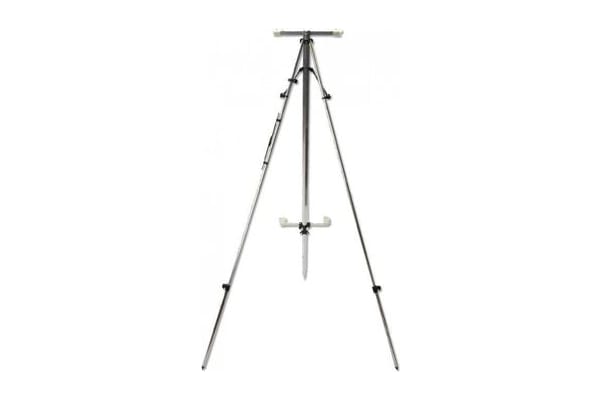 | Best Overall | Ian Golds Super Match DB1 Two Rod Tripod | Beach and match anglers who want one proven, fully kitted two-rod tripod that copes with shingle or soft sand. |
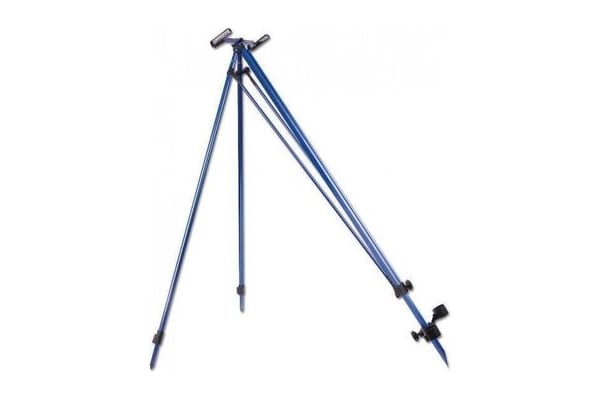 | Sturdiest | Shakespeare Salt Beach Rest | Anglers fishing windy, exposed marks who value a stiff, rock-solid stand over height or extras. |
 | Tallest Reach | NGT 7ft Sea Fishing Tripod | Anglers on steep shingle or into a big sea who need the rod tips kept as high as possible above the surf. |
 | Most Popular | Leeda Icon Twin Head Tripod | Anglers after a familiar, well-priced all-round beach tripod with non-scratch rests and a tilt-angle head. |
 | Best Value | Leeda Icon Extra Wide Tripod | Anglers fishing soft sand or loose shingle who want the widest, most stable footprint for the least outlay. |
What To Look for In the Best Sea Fishing Tripods
Theresa May had it right… Well, kind of...
In a nutshell, what you want overall is the following…
"Strong and stable"… Not "weak and wobbly."
Here are the features you need to look for: -
Strong Legs
Sea fishing is a lot more rough and ready than other disciplines. The fish, the rods, the line and the terrain all tend to be a bit heavier. Considering the pull of the tide, beach winds and uneven ground, you need a sea fishing tripod with strong legs.
Adjustability
Rods come in many sizes. So, you'll want something that can definitely accommodate yours.
And there's more…
If it is blowing a gale, you will need the option to lower your rods and get them out of the wind. A tripod that is easily adjusted will allow you to do this.
It's also worth pointing out, there are many decent tripod accessories on the market today that will help adjust an adaptable tripod to your needs.
Security
Those beach casters can get pretty pricey. It only takes one fall for your ring whipping to end up cracked or worse (ask us how we know!). Be sure to pick a beach casting tripod that will hold your rods tight and secure.
If your rod has taken a spill, you might be in the market for a new one. We've got a great article on the best sea fishing rods on the market right here.
The Best Sea Fishing Tripods
Ian Golds Super Match DB1 Two Rod Tripod
#1 Best Overall
Ian Golds more or less invented this style of beach tripod, and twenty-odd years on the Super Match DB1 is still the one I'd point most people at first. It's earned that by being the tripod everyone else copies, and it turns up under match anglers and pleasure anglers alike all round the UK coast.
What sells it for me is that it arrives ready to fish rather than as a bare frame. The luminous double head and the double cup at the base take two rods properly, so I can fish a close-in rod and a distance rod off one stand, and the glow in the head is a genuine help finding the rests in the dark.
It also comes with the Leg Lock Kit, a Trace Bar and Leg Extenders as standard, and those matter on a real beach. The leg locks stop the legs creeping down under the weight of two loaded rods, the extenders let me lift the tips clear of a bigger surf, and the spiked, adjustable legs bite into shingle or push into soft sand without much fuss.
It isn't the cheapest or the lightest stand here, and the full kit adds a bit of bulk to carry down to the tideline. For an occasional summer session that's more tripod than anyone needs, but for regular beach work it's the one I keep coming back to.
Best suited to
Beach and match anglers who want one proven, fully kitted two-rod tripod that copes with shingle or soft sand.
Pros
- Arrives fully kitted with leg locks, trace bar and extenders
- Luminous double head and cup for two rods in the dark
- Proven design that has held up for twenty-plus years
Cons
- Heavier and bulkier to carry than a basic stand
- More tripod than an occasional angler really needs
Shakespeare Salt Beach Rest
#2 Sturdiest
Rigidity is the whole point of the Salt Beach Rest, and it's the reason it takes the sturdiest slot for me. Shakespeare have built the central section with an angular profile and paired it with rounded legs, and that mix is what stops the frame twisting and flexing when the wind gets up.
That stiffness shows on an exposed mark. When there's a cross-wind pushing on two rods, a flimsy stand shudders and creeps, and I spend the session re-setting it. The Salt just plants and stays put, which is exactly what I want when I'm watching for a bite rather than fussing over the tripod.
It's powder-coated aluminium, so it's light enough to carry down the beach and it shrugs off the salt spray that eats cheaper stands. Shakespeare market it as the ultimate in stability, and while that's marketing talk, the build genuinely does feel more solid underhand than most beach rests at this end of the market.
Where it gives ground is on frills. The head is a simple rest rather than a luxury twin-cup setup, and it isn't the tallest stand here for a really steep shingle beach. If rock-solid steadiness matters more than reach or gadgets, though, it's hard to fault.
Best suited to
Anglers fishing windy, exposed marks who value a stiff, rock-solid stand over height or extras.
Pros
- Angular centre section and rounded legs make it genuinely stiff
- Powder-coated aluminium shrugs off salt and stays light
- Holds firm in a cross-wind without creeping
Cons
- Basic head rather than a fully featured twin-cup setup
- Not the tallest for a really steep shingle beach
NGT 7ft Sea Fishing Tripod
#3 Tallest Reach
On a steep shingle beach with a big sea running, height is everything, and that's where the NGT earns its slot. It extends to a full 7ft, near enough 213cm, which is a good deal taller than the usual 5ft to 6ft stands and keeps the rod tips well up out of the wash.
That reach changes how a rough session goes. When the surf is pushing weed and the tide is climbing, a low stand leaves the line dragging in the water and the lead walking. Lifting the tips up high with the NGT keeps a tighter line and helps me spot a proper bite instead of surf noise.
It carries twin adjustable heads so it takes two rods, and there's an adjustable stabiliser cross-bar between the legs that firms the whole frame up once it's set. The aluminium build in the blue finish is light enough to carry, which I appreciate given how tall it stands when it's up.
The honest catch with any tall tripod is leverage. Run it right up to 7ft on a windy, flat beach and there's more of it to catch the wind, so I hang a weight or my tackle bag off the centre to anchor it. On a gentle beach that height is more than I'd bother with, but for big surf it's the pick.
Best suited to
Anglers on steep shingle or into a big sea who need the rod tips kept as high as possible above the surf.
Pros
- Extends to a tall 7ft to keep tips clear of the surf
- Adjustable stabiliser cross-bar firms up the frame
- Twin adjustable heads take two rods
Cons
- Extra height catches more wind and needs anchoring
- Overkill on a flat, gentle beach
Leeda Icon Twin Head Tripod
#4 Most Popular
Walk most UK beaches and the Icon Twin Head is the stand I seem to spot propped up more than any other. It's Leeda's bread-and-butter beach tripod, the standard all-rounder that plenty of anglers cut their teeth on, and popularity like that usually means a design that simply works.
The twin head is the heart of it. The rod rests are rubber-coated so they don't scratch the blank or the reel seat, and the adjustable butt cups seat two rods securely at the base. That covers the everyday beach set-up of a rod fished close and a rod fished long without any drama.
Two touches lift it above the basics. The tilt-angle system lets me set the rods high and steep for a tight line into a surf, or lower and flatter for a slack-line watch, and the leg-retention system folds the whole thing down neatly so it doesn't sprawl in the boot or across the shoulder on the walk.
It sits on a standard-width leg stance, though, so on really soft, dry sand it can want a firm push-in and a bag hung off it to settle. It's an aluminium extending stand at a sensible price rather than a heavy-duty specialist, and taken as an easy, do-most-things beach tripod that's exactly the appeal.
Best suited to
Anglers after a familiar, well-priced all-round beach tripod with non-scratch rests and a tilt-angle head.
Pros
- Rubber-coated rests and adjustable butt cups protect the tackle
- Tilt-angle system sets the rod angle to the conditions
- Leg-retention folds it down neatly for transport
Cons
- Standard-width stance can struggle on very soft sand
- No leg-lock kit or extenders in the box
Leeda Icon Extra Wide Tripod
#5 Best Value
Soft ground is where the Extra Wide makes its case. Where its Twin Head sibling sits on a standard leg stance, this one splays the legs noticeably wider, and that broader footprint is what keeps it planted on the loose, dry sand and shingle that tips a narrower stand over.
That wide stance is the one real difference to lean on. A wider base spreads the load and drops the centre of gravity, so the tripod digs in and stays level rather than sinking on one leg and leaning into the surf. On a soft mark that's the difference between a steady session and constantly straightening the stand.
The rest of it keeps things simple in the Icon mould. It's an aluminium frame with rubber non-scratch rests, so two rods sit safely without chewing up the blanks, and it's light enough to carry down without a thought. There's nothing fancy going on, and at this end it doesn't need to be.
It's the cheapest stand in this guide, and the budget shows in the extras rather than the build, so there's no leg-lock kit or luminous head thrown in. The wider splay also takes up a touch more room in the boot. For a stable footing on soft ground at the lowest outlay, though, it's the value pick.
Best suited to
Anglers fishing soft sand or loose shingle who want the widest, most stable footprint for the least outlay.
Pros
- Extra-wide leg splay stays stable on soft sand and shingle
- Rubber non-scratch rests protect two rods
- Cheapest stand here for the outlay
Cons
- No leg-lock kit or luminous head included
- Wider splay takes up more room in the boot
Sea Fishing Tripod FAQs
Still choosing a beach tripod?
These are the questions worth settling before buying.
What height sea fishing tripod do I need?
For most beaches a 5ft to 6ft tripod is ideal, holding the rod tips high enough to keep line clear of the surf. On steep shingle or when fishing into a big sea, a taller 7ft tripod keeps the tips higher still. Look for adjustable or telescopic legs so you can set the height to the beach and the conditions.
How do you keep a sea fishing tripod stable on the beach?
Push or spike the legs into the sand or shingle, spread them wide for a low centre of gravity, and hang your tackle bag or a weight from the centre to anchor it in wind. A wide-stance tripod helps on soft sand, and a leg-lock kit stops the legs creeping. In a big blow, walk it back from the tideline and drop the height.
Can a sea fishing tripod hold two rods?
Yes, most beach tripods here take two rods, with a double head to rest the rods and a double cup at the base to seat the butts. That lets you fish two rods at different distances from one stable stand, which is the usual set-up for beach and shore fishing.
What should I look for in a beach tripod?
Strong, rigid legs that will not flex in wind, secure height adjustment, and a stable wide stance are the essentials. A double head and cup for two rods, a leg-lock kit or guy points for windy marks, and light but tough aluminium construction all help. Match the height to your usual beaches and you will not go far wrong.
Final Thoughts…
The best sea fishing tripods will be adjustable, sturdy and corrosion-resistant. Make sure whatever you choose has these three features, and then move on to the 'finer points' such as size, rod cup depth and 'extras'.
Remember, rod rest holders should stay exactly where you put them for the day, so look for features that make this more likely.
While we are talking sea fishing, why not visit some of our other articles that will help you catch?
Looking for the best sea fishing rigs?
If you are more active, give lure fishing a go. Check our guides out!
Tight Lines!