
The Best Sea Fishing Lures for 2026

Ah the age old question. What are the best sea fishing lures? If you know the secret please do tell. Joking aside, whilst it isn’t possible to always cater to the fish’s appetite, you can hedge your bets by using lures that have been tried and tested.
If you thought realism was the key, you may just have to think again. Whilst the best sea fishing lures will often contain elements designed to mimic, more often than not they can also look like something from another planet!
But then working it out is half the fun, and the reason we keep returning, in rain or shine, to try and solve the puzzle.
In this article we are going to look at various types of lure, including some that are proven to bring success in your sea fishing.
Quick Answer
The Dexter Wedge Lure is my top pick because it is the world-famous long-casting metal that just catches, with a wobbling action that pulls bass, mackerel and pollack from shore or boat across a huge range of weights.
The table below sorts the lures by the job they do, from a long-casting metal and a distance blade to a weedless bass sandeel, a surface pencil and a big soft eel.
| Best for | Lure | Best suited to | |
|---|---|---|---|
 | Best Metal Lure | Dexter Wedge Lure | Beach and rock anglers wanting one do-it-all metal that casts a mile for bass, mackerel and pollack, and doubles as a jigging lure over deep marks. |
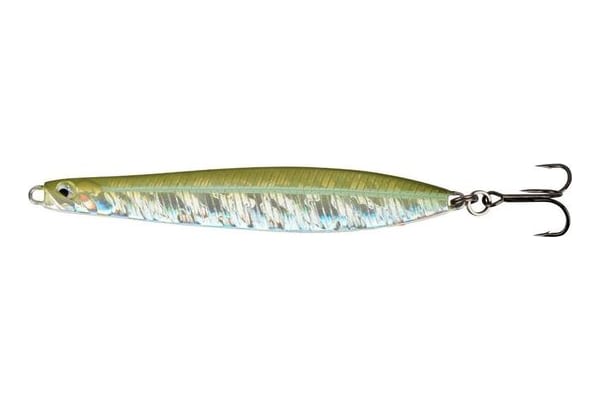 | Best Value | Savage Gear Seeker ISP | Anglers after a cheap, dense blade that casts into a headwind for mackerel and bass, and won't break the heart when it snags rough ground. |
 | Top for Bass | Savage Gear Sandeel V2 Weedless | Bass anglers fishing snaggy rock, weed and kelp who want a lifelike sandeel that comes through cover cleanly. |
 | Surface Sport | Savage Gear Sandeel Pencil SW | Bass anglers chasing surface sport on calm mornings and light chop, with saltwater-grade hooks ready to fish out of the packet. |
 | Top for Pollack | Savage Gear Sandeel Jerk Minnow | Rock, pier and breakwater anglers wanting a tough hard-body sandeel that survives toothy pollack and casts well on the jerk. |
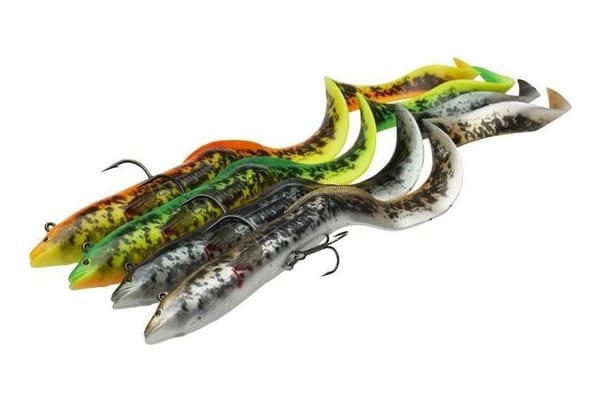 | Big-Fish Eel | Savage Gear 4D Real Eel | Anglers deliberately targeting bigger fish, cod, better bass, pollack and ling, and happy to trade a few bites for size. |
What are sea fishing lures?
Sea fishing lures are basically artificial elements, tied on to the end of the line, specifically designed to entice a bite from a fish. Fish normally grab them quickly, so they normally have at least one set of treble hooks attached to ensure a hookup from any angle.
The use of a lure is entirely different from a static bate with which you would use a sea rig instead of a lure. The lure is designed to attract fish by several means, read on to find out the secret to why fish strike...
Imitative sea fishing lures:
These are designed to resemble (loosely) something that the fish could reasonably expect to encounter in their natural habitat.
It’s sometimes a little unclear what will cause a fish to strike, but generally the manufacturers of the best sea fishing lures don’t go for subtlety, instead choosing to combine a wide range of features in order to ensure a take.
What kind of features are we talking about?
Lures with eyes
The best sea fishing lures will have some kind of ‘eye’ either painted or stuck onto the lure. It would appear to be hardwired into the brain of a fish that an eye equals food!
Lures that are shiny
Obviously, fish are silver and shiny, the best sea fishing lures will be as close to the real thing as possible. Other elements are also added to recreate realistic effect. Watch out for blood head lures where there is a red element contained somewhere on the body designed to imitate damage.
Lures that move realistically
Anything with a paddle tail, diving vain, popping face or a multi segmented body is designed to closely resemble the movement of a fish. This movement can be a normal swimming action or conversely something designed to simulate an injury.
Diving vanes and popping faces in particular are meant to emulate a fish in distress. Predatory sea fish can be ruthless when it comes to taking advantage of weakness, and show absolutely no mercy. Generally wounded fish are the preferred dish of the day!
Provocative lures
Now these are a bit of an enigma, sometimes fish will attack something that looks nothing like what they would normally encounter in their habitat. It is a common talking point amongst lure fishermen as to why this happens.
There are suggestions that it is an instinct or territorial response, others suggest that it is curiosity and still others suggest that the fish simply lose their temper.
You can spot these kinds of lures by their garishness. Look for bright colours, and strange patterns and shapes. The best sea fishing lures often will encompass an element of imitation with something else more outrageous that is designed to pique the fish’s curiosity.
How to use sea fishing lures?
The key to fishing with lures is variety, so we recommend that you don’t just rely on one lure if you are looking to be successful. Even if you have caught on a specific type of lure before, don’t think that guarantees success the next time.
Predatory fish are notoriously fickle, and it is a brave angler who puts all of their hope into one tiny piece of shiny plastic or metal, it doesn't matter what you like, its the fish who ultimately decide what they consider to be the best sea fishing lures.
One point to note, however, is that to be effective with lure fishing, you really need to have the correct balance of a decent sea rod and a top sea reel for everything to work in synergy and for the lure to retrieve naturally.
With regards to actually fishing with them, again variety is key. Cast your lure out and then wind it in. No luck? Do the same and change the speed of your retrieve. Still no luck? Cast to a different spot. By constantly changing something you are giving yourself the best possible chance of success.
Let's be honest, we all want to catch a bass. Whilst they will actually eat almost anything, lets see what an expert has to say on what he considers to be the best sea fishing lures.
Can I use single hooks on a sea fishing lure?
You can indeed, in fact due to the nature of trebles, some anglers consider them unethical. Even if your conscience isn’t ‘pricking’ at you, by putting single hooks in the place of trebles you’ll reduce the likelihood of catching snags or weed.
Some of the best sea fishing lures will have split rings so you can change the hooks to whatever configuration you like.
Anyway, we did promise, here’s our very best lure box...
The Best Sea Fishing Lures
Dexter Wedge Lure
#1 Best Metal Lure
Nearly every UK sea box ends up with a Dexter Wedge in it, and mine's no different. It's the metal I clip on when I just want to catch rather than think, because the wobble comes from the wedge shape itself and does the work whatever I do with the rod.
It shines off an open beach or a rock mark where distance matters. The weight range runs from 10g right up to 110g, so a light one covers shallow shore water and a heavy one gets down over deep or boat marks, and it's still strong and aerodynamic enough to punch into a breeze.
The reflective silver foil changes colour as it tracks through the water, and it's built properly with chromed solid brass blades, stainless split rings and decent hooks. It isn't only a casting lure either. I've dropped one as a jigging lure and swapped it in for a lead over a wreck when working feathers, and it earns an extra bite doing that.
It's a flashy reaction lure though, not a lifelike imitation, so on a hard day when bass want a soft sandeel it can get ignored. The open trebles also snag on rough, weedy ground, so over kelp I'd reach for something weedless instead.
Best suited to
Beach and rock anglers wanting one do-it-all metal that casts a mile for bass, mackerel and pollack, and doubles as a jigging lure over deep marks.
Pros
- Casts a long way off beach and rock
- Huge weight range from 10g to 110g
- Catches bass, mackerel, pollack and more
Cons
- Trebles snag on rough, weedy ground
- A flashy reaction lure, not a subtle imitation
Savage Gear Seeker ISP
#2 Best Value
When the wind's in my face and I still need to reach the fish, this is the little metal I clip on. It's a compact, dense blade built for ultra-long casting even into a headwind, which is exactly what an exposed shore mark asks for.
On the retrieve it comes alive, swimming lively and erratically with a 360-degree rotation on the slightest spin-stop that throws a lot of flash. That's what pulls mackerel, bass, pollack, garfish and coalfish, and a stop-start wind keeps it working.
Each one arrives with a Y-treble and a wide-gape single, so I match the hook to the venue rather than being stuck with one. The Intense Strike Point holes are filled with night-glow and UV epoxy back by the tail to drag the hit onto the hook. Sizes run from around 6.8cm to 10cm and up to about 28g.
The real appeal is that it's cheap enough to fish hard over rough ground without wincing every time it hangs up. Being light and small, though, it struggles to reach depth in deep or fast water, and it's a bright reaction lure rather than a natural imitation.
Best suited to
Anglers after a cheap, dense blade that casts into a headwind for mackerel and bass, and won't break the heart when it snags rough ground.
Pros
- Casts a long way, even into a headwind
- Cheap enough to fish over rough ground
- Two hook options in every pack
Cons
- Too light to reach depth in deep or fast water
- A bright reaction lure, not a natural imitation
Savage Gear Sandeel V2 Weedless
#3 Top for Bass
Snaggy, weedy bass ground used to cost me a lure every few casts until I started fishing a proper weedless sandeel. This one is pre-rigged and comes through kelp and rock cleanly, which means I'll actually fish the spots where the bass sit instead of avoiding them.
It has a lively kicking action on both the drop and the retrieve, and the rolling jig head brings it up through the water as I wind. The soft PVC body is a genuinely realistic sandeel shape, and that combination of movement and profile is what fools wary bass in clear water.
There's an internal glass rattle for a bit of provoking sound, and it's removable if I want it quiet. The Pro Peg holds the body to the head with a toothpick so it doesn't slide down, and the EWG hook clicks on and off. It comes in a 22g and a 33g size, roughly 11.5cm and 13cm, covering close shore water and a bit more range or depth.
A single weedless hook does sit a touch behind an open treble for hookups, but that's the trade I'll take over ground that eats trebles. The soft body also gets chewed and torn by fish, so I go through a few on a good session.
Best suited to
Bass anglers fishing snaggy rock, weed and kelp who want a lifelike sandeel that comes through cover cleanly.
Pros
- Comes through weed and rock cleanly
- Lively kicking action plus a glass rattle
- Realistic sandeel profile bass love
Cons
- Weedless single hooks a shade less than a treble
- Soft body tears and needs replacing
Savage Gear Sandeel Pencil SW
#4 Surface Sport
Nothing in sea lure fishing beats watching a bass climb all over a lure on top, and that's the whole reason this pencil is in the box. It's a saltwater topwater lure meant to be walked across the surface, and the takes are heart-stopping every time.
The way I fish it is a steady walk-the-dog, rocking it side to side with a rhythmic twitch so it zig-zags across the top. Calm mornings are prime, though it still works through a bit of chop. It comes in 9cm and 12.5cm, so I can go smaller on flat water and step up when there's a ripple, and pollack will hit it as well as bass.
Sensibly for the sea, it's supplied with proper saltwater sea-bass hooks and a treble protector, so there's no swapping out cheap freshwater trebles before it's fishable. The five colours in the range are all chosen with bass in mind.
Surface lures are situational by nature, so this one needs the right morning to shine and it's dead in coloured water or a heavy surf. On a day when the fish won't look up it stays in the box, which is just how topwater fishing goes.
Best suited to
Bass anglers chasing surface sport on calm mornings and light chop, with saltwater-grade hooks ready to fish out of the packet.
Pros
- The most exciting way to catch a bass
- Saltwater hooks and treble protector included
- Two sizes for calm to choppy water
Cons
- Surface lures only work in the right conditions
- No use in coloured water or heavy surf
Savage Gear Sandeel Jerk Minnow
#5 Top for Pollack
Pollack are brutal on soft lures, chewing them to shreds in a session, so for rock and pier work I'd rather fish something that stands up to teeth. This hard ABS jerkbait does exactly that and keeps its shape hit after hit.
The body is shaped from a 3D scan of a real sandeel, so it looks the part, and the long slender hard shell takes the punishment that rock marks and toothy fish dish out. It suspends in the water and has a built-in magnetic long-cast system, which gives it the distance I need to reach fish off a breakwater or pier.
It's a lure I have to work rather than just wind, fished on the jerk and twitch to give that erratic, wounded-fish action pollack can't leave alone. Three sharp ST46 trebles pin the takes, and the sizes span 10cm, 11cm and 14cm for everything from schoolies to a better fish. Bass and coalfish take it too.
A hard body hung with trebles snags worse than a weedless soft lure over really rough ground, so I pick my spots. It also needs active rod work to come alive, so it's not the lure to hand a beginner who just wants to cast and retrieve.
Best suited to
Rock, pier and breakwater anglers wanting a tough hard-body sandeel that survives toothy pollack and casts well on the jerk.
Pros
- Hard ABS body survives toothy pollack
- Magnetic system casts a long way
- Erratic jerk action off rocks and piers
Cons
- Trebles snag on very rough ground
- Needs active jerking, not just winding
Savage Gear 4D Real Eel
#6 Big-Fish Eel
Sometimes the whole point is to sort the better fish from the small stuff, and a 20cm eel does that for me. It's an iconic soft line-thru swimbait, and the big profile puts off the schoolies while getting noticed by cod, larger bass, pollack and ling.
The line-thru design is the clever part, letting a hooked fish slide the body up the line so it can't use the lure's weight to lever the hook out. That matters when a proper fish is thrashing at the net, and it's saved me landing them more than once.
It swims with a big lively curl-tail kicking action on both a steady retrieve and the drop, and the 4D colours carry a lamprey-skin print with added strike-triggering scent to seal the deal. There's a non-lead harness with a built-in steel rattle, plus a tournament J-hook and a removable Y-treble, and it'll fish cast, vertical or trolled.
That big profile is species-specific, so on a quiet day it won't keep me busy with mackerel and schoolies the way a small metal would. For average shore bass it's more lure than the job needs, which is exactly why I only tie it on when I'm fishing for something bigger.
Best suited to
Anglers deliberately targeting bigger fish, cod, better bass, pollack and ling, and happy to trade a few bites for size.
Pros
- Big 20cm profile sorts out better fish
- Scent, rattle and lamprey-skin print
- Fishes cast, vertical or trolled
Cons
- Big profile is species-specific
- Too much lure for small schoolies and mackerel
Sea Fishing Lure FAQs
Still building a sea-lure box?
These are the questions worth settling before buying.
What is the best lure for sea bass?
It depends on the mark. Over clean ground a metal casting lure or a soft sandeel fished on the retrieve is hard to beat, while snaggy rock and weed call for a weedless soft sandeel that comes through cleanly. On calm mornings a surface pencil worked across the top produces the most exciting bass sport of all. Carry one of each and you are covered.
What size and weight sea lure should I use?
Match the weight to the casting range and depth you need. Light 10g to 20g metals and small soft lures suit close, shallow shore work, while 28g to 60g and up lets you reach distance marks and get down in deeper or faster water. A bigger 20cm soft eel targets larger cod and bass. Heavier is not always better, so size it to the conditions.
Can you use lures from the beach for sea fishing?
Yes, lure fishing works well from beaches, rock marks, piers and estuaries, not just from a boat. A long-casting metal lure is ideal from an open beach for bass and mackerel, while soft sandeels and surface lures shine around rock and structure. You need less gear than bait fishing, just a rod, reel and a small box of lures.
What are imitative and provocative sea lures?
Imitative lures copy a real prey fish, like a soft sandeel or a realistic eel, and work by looking and swimming like the natural food. Provocative lures, such as bright metals and noisy surface pencils, trigger a reaction bite through flash, vibration and disturbance rather than realism. Both catch, and switching between them is often the key on a hard day.
Conclusion
There is no ‘silver bullet’ in lure fishing. Ultimately the choice as to which are the best sea fishing lures lies firmly with the fish and no one else. You’ll tend to catch on the days where you are both in agreement. However the best way to ensure success is to go with variety, whether that is what you fish with, or how you fish with it.
Why not pick up a couple of different lures? Some of our best sea fishing trips in Scotland have come about by trying different varieties of lure.
Thanks for reading.
Tight Lines!