
The Best Fly Rods for Reservoir Fishing in 2026

We would probably all agree that fly fishing on a reservoir is challenging. But that’s what makes it fun?
Reservoirs are bigger, and as result, generally, that means we have to upscale everything. Our rods, our flies and maybe even our ideas? It is important to be correctly equipped,
In this article we are going to talk about what factors decide the best fly rod for reservoir fishing to help you make an informed purchase. Keep reading and we’ll give you the bigger picture.
Quick Answer
The Greys Kite Fly Rod is my top overall pick because it brings a premium, fast-recovering blank to reservoir fishing, with the distance and control a big stillwater demands.
For less money, my starting point would be the Leeda Profil Stillwater Fly Rod. The table below groups the rods by budget, from premium reservoir blanks down to affordable purpose-built stillwater rods.
| Rank | Best for | Fly Rod | Best suited to |
|---|---|---|---|
| Premium (£150+) | |||
| #1 | Best Overall | Greys Kite Fly Rod | Committed reservoir anglers who want a premium, fast-recovering rod and will pay for it. |
| #2 | Great All-Rounder | Greys Lance Fly Rod | Reservoir anglers who want a quality Greys rod with a forgiving action, without the flagship price. |
| Mid-range (£40-£100) | |||
| #3 | Best for Distance | Snowbee Classic SW Fly Rod | Reservoir anglers who need to punch a line into the wind for extra distance. |
| Budget (under £40) | |||
| #4 | Great Value | Leeda Profil Stillwater Fly Rod | Budget-minded anglers who want a purpose-built stillwater rod without spending big. |
| #5 | Best Budget | Shakespeare SKP Elite Fly Rod | Complete beginners after the cheapest way to try reservoir fly fishing. |
What is the best fly rod for reservoir fishing?
Well to answer that question we need to look at what makes reservoir fishing slightly different.
It’s no secret that reservoirs are bigger than your local trout pool. As a result, you may find that the fish are spread over a larger area. So, you’ll need to cover more water and maybe more mobile… If you can cast a bit further then you will be achieving this goal. The best fly rod for reservoir fishing will be one that allows you to chuck a line a fair distance.
Could it be that simple?
...No. Common sense tells us that reservoirs are pretty deep. Unless the fish are on the top (which a lot of the time they aren’t) you will need a rod that is capable of throwing out a sinking line. Sinking lines tend to be significantly heavier. The best fly rod for reservoir fishing will cast line heavier than #5. There are two reasons for this.
Firstly, casting a heavier line requires a stronger blank to give it the necessary pushing power to get all of that line out behind you and then through on the forward cast. Secondly, when you’ve brought your line in and are about to pull it back for the cast, with a sinking line there is still a fair bit of line under the water.
If you have a lightweight rod, you are in serious danger of placing too much pressure on it, if you are trying to fight against the tension of several yards of submerged and heavy line. The best fly rod for reservoir fishing will have the necessary strength to cast a heavy sinking line.
So, we need a rod that can cast far and pull a heavy line? That’s it right?
There’s still more. As we have said, the fish tend to be more spread in reservoirs, so you are going to go a bit bigger on your fly. Have you ever tried to spot a midge 25 metres away? The trout fare no better. By casting a bigger fly, you increase the chances of it being noticed. Casting a gold headed cats’ whisker with a light rod is an exercise in endurance.
Whilst your arm will traditionally be less fatigued with a lighter rod, if you are having to cast it twice as hard to get a heavy fly out, your net gain is zero. The best fly rod for reservoir fishing will be able to cast bigger flies.
Finally, we’re British, so let’s talk about the weather. Reservoirs tend to be a bit breezy. If the wind is in your face, a small water affords you the chance of simply walking to the opposite bank to get the wind behind you. A reservoir? Enjoy your walk. You will need a rod that can punch a line through an oncoming wind. The best fly rod for reservoir fishing will make this easy.
What length is the best fly rod for reservoir fishing?
Based on all of the above a shorter rod isn’t going to cut it. As an absolute bare minimum, the best fly rod for reservoir fishing should be above 9ft. Longer isn’t always better and it’s more about the action, but any shorter than that and you will be costing yourself distance, and pulling power.
Alongside the length of the rod, of course the reel needs to equally be considered. Getting the right balance of fly rod and reel is very important in order to catch fish efficiently. As a secondary consideration, if you are using a longer, heavier, rod you could compensate this with ensuring some other gear is lighter. A decent fly fishing vest could help with this.
What weight of line should I use with the best fly rod for reservoir fishing?
You can use any line, but go too light and you are going to have a hard day. As we have said a line weight of #5 is the lowest you should go. To get any measure of success the best fly rod for reservoir fishing will be around #7 to #8 casting weight.
If you are casting weight forward sinking lines that should give you the optimum amount of strength without you needing arms like Arnold Schwarzenegger to last a session.
How to cast a fly rod
They say a picture paints a thousand words. We’ll leave this one to the experts…
Our choices for the best fly fishing rods for reservoir fishing:
Greys Kite Fly Rod
#1 Best Overall
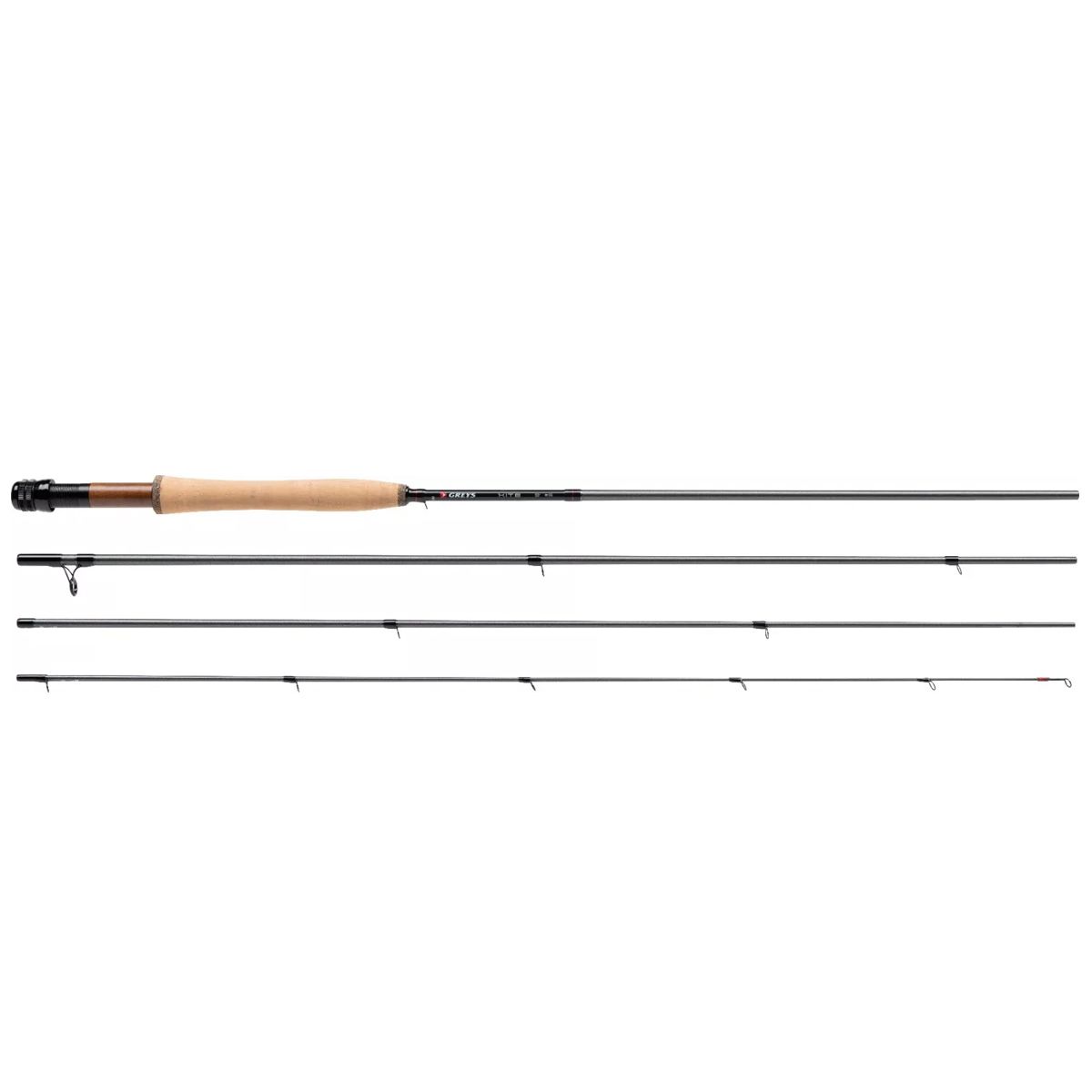
The Greys Kite is the reservoir fly rod I would put at the top, because Greys have a long pedigree in fly fishing and the Kite brings a genuinely premium blank to stillwater work. It feels a class above the moment it is in the hand.
It is built on Greys' Toreon high-modulus four-piece carbon blank with a high-recovery, high-performance action, and that is the heart of it. On a reservoir, where reaching the fish often means punching a line into the wind, that fast recovery loads and unloads cleanly for real distance. It comes in the sizes that matter, 9'6" and 10ft in #7 and #8.
The fittings match the blank, with an AAA-grade cork handle, single-foot snake guides, lined stripper guides and an alloy reel seat, and it is supplied with both a cloth bag and a hard tube to protect it. It is a rod to buy once.
It is a premium price and more rod than an occasional angler needs, but for a committed reservoir angler who wants distance, control and a rod to last, the Kite is the standout.
Best suited to
Committed reservoir anglers who want a premium, fast-recovering rod and will pay for it.
Pros
- Toreon high-modulus 4-piece blank
- Fast recovery for distance into wind
- AAA cork, supplied with bag and hard tube
Cons
- A premium price
- More rod than an occasional angler needs
Greys Lance Fly Rod
#2 Great All-Rounder
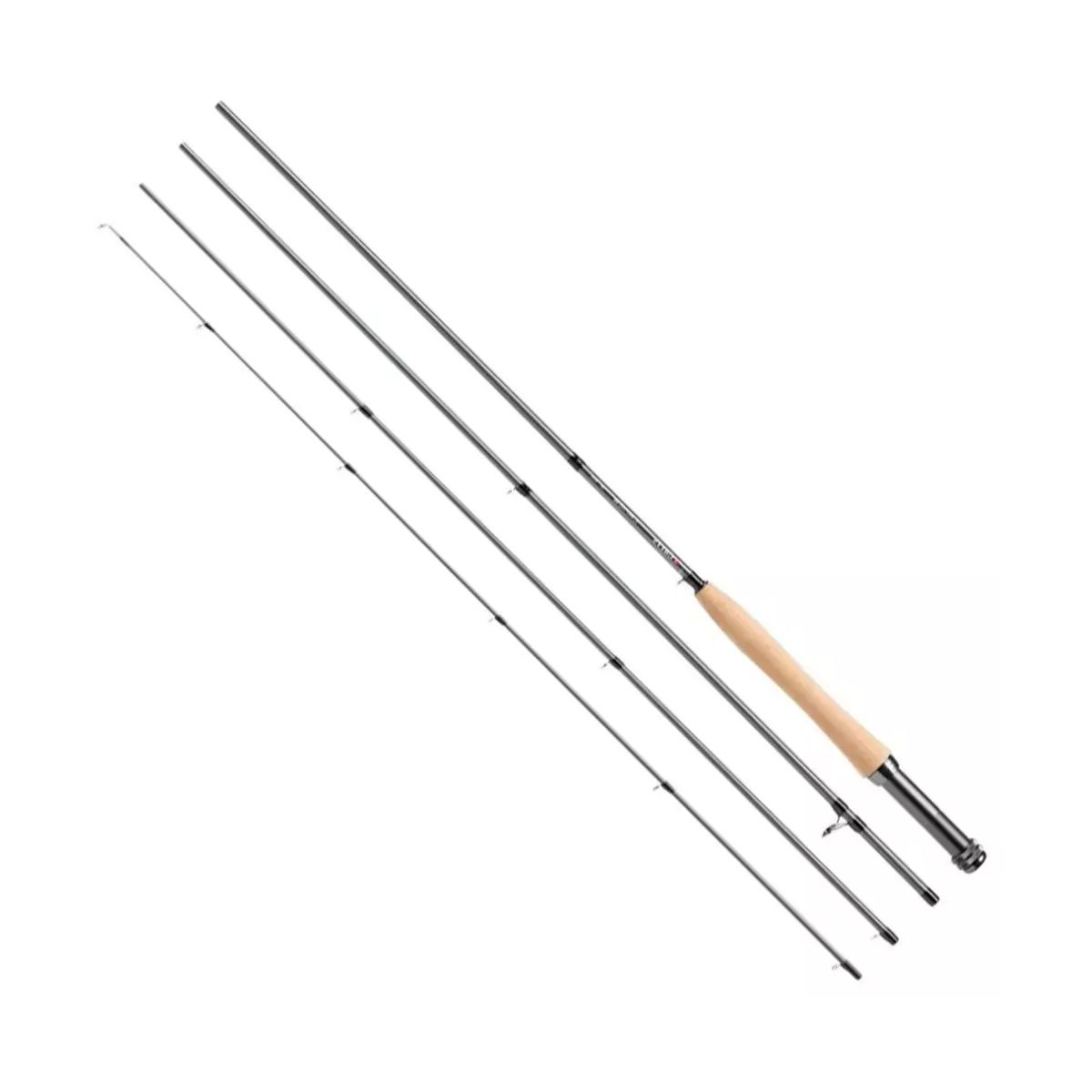
The Greys Lance is the do-a-lot reservoir rod I point most anglers towards, because it carries Greys build quality in a more forgiving, easier-to-fish package than the flagship Kite.
It runs an intermediate-modulus four-piece carbon blank with a user-friendly high-performance action, so it loads a little more progressively than the fast Kite. For an angler still building their casting, or fishing a long day on the water, that easier action is genuinely less tiring and more forgiving of timing. It comes in 9'6" and 10ft, #7 and #8.
The build is proper Greys, with an AAA cork handle, single-foot snake guides, lined stripper guides and an all-alloy anodised reel seat, and it is supplied in a sectioned rod tube. It is a lot of rod for the money.
It is not quite as crisp or as long-casting as the Kite, so a distance specialist would size up, but as a versatile, quality reservoir rod at a sensible price, it is very easy to recommend.
Best suited to
Reservoir anglers who want a quality Greys rod with a forgiving action, without the flagship price.
Pros
- Intermediate-modulus 4-piece blank
- Forgiving, easy-to-fish action
- AAA cork and alloy reel seat
Cons
- Less crisp than the flagship Kite
- Upper-mid price
Snowbee Classic SW Fly Rod
#3 Best for Distance and Wind
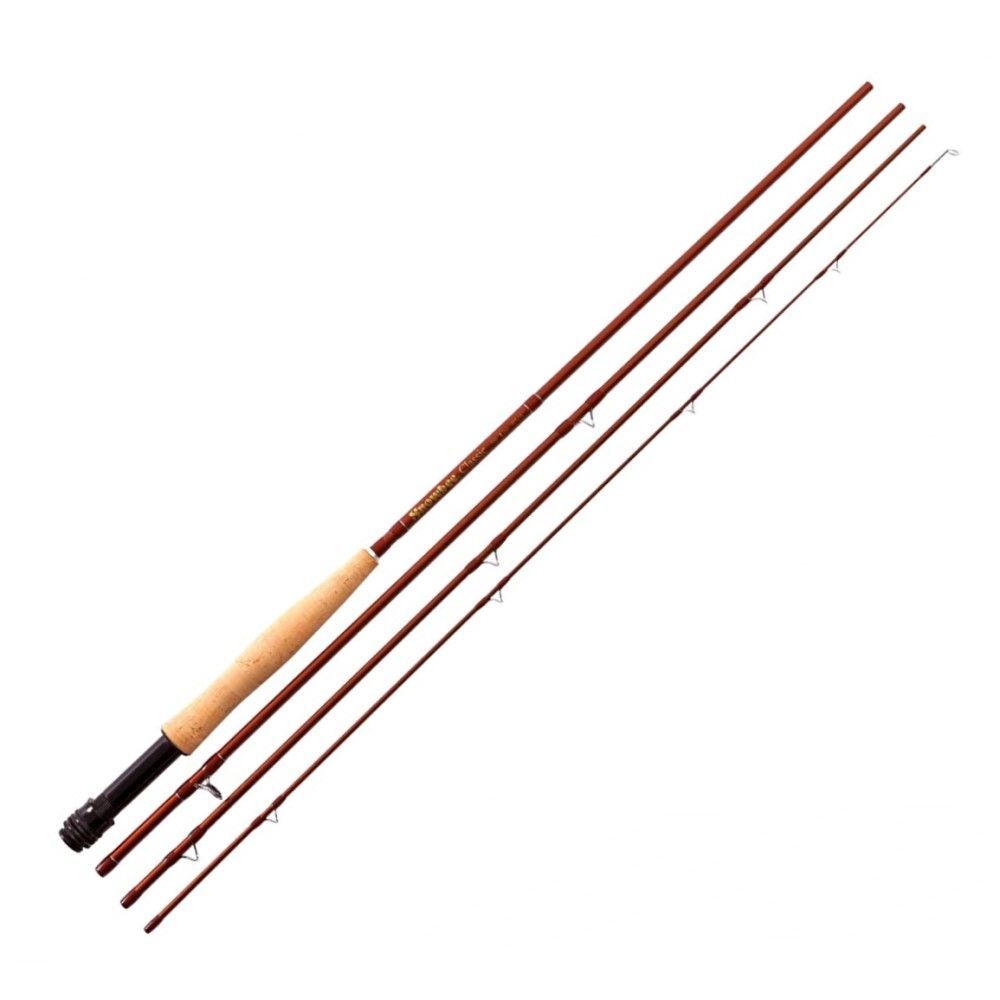
The Snowbee Classic SW is the rod I would pick when the wind is up and distance matters, and Snowbee describe it exactly that way: designed for larger stillwaters and reservoirs where additional distance is required.
The fast, middle-to-tip action is the point. It delivers effortless power to punch a #8 line out across a big water, which is exactly what a reservoir angler needs when the fish are beyond easy range or a crosswind is fighting the cast. At 9ft and just 116g it stays light in the hand through a long session.
It is well finished for the money, with a full Wells cork handle in A-grade cork, lined stripper rings, an oversize hayfork tip ring and a lightweight black aluminium reel fitting. It is a proper reservoir tool at a sensible price.
It is a dedicated 9ft #8 distance rod rather than a light all-rounder, so for delicate close work it is more than the job needs. For distance and wind on a reservoir, it is superb value.
Best suited to
Reservoir anglers who need to punch a line into the wind for extra distance.
Pros
- Fast action built for distance
- Snowbee-rated for larger stillwaters
- Light 116g, full Wells cork handle
Cons
- A dedicated #8 distance rod
- More than needed for close, delicate work
Leeda Profil Stillwater Fly Rod
#4 Great Value

The Leeda Profil Stillwater is the value pick, and the clue is in the name: it is a rod built specifically for stillwater and reservoir fly fishing, not a general blank pressed into service.
The 10ft #7 is the classic reservoir length and weight. The slim, light, responsive blank has a middle-to-tip action that loads easily and casts a #7 line a sensible distance, which for most reservoir fishing is exactly what is needed, and the length helps mend and control the line on the water. There is a 9ft #6 in the range too for lighter days.
For the money the finish is good, with a full Wells cork handle, lightweight snake guides and a keeper ring, and it is supplied in a cloth bag. It is a genuine reservoir rod at a budget price.
It does not have the recovery or the distance of the premium Greys rods, so a keen angler will in time want more, but as an affordable, purpose-built stillwater rod to learn and fish on, it is hard to beat.
Best suited to
Budget-minded anglers who want a purpose-built stillwater rod without spending big.
Pros
- Purpose-built stillwater rod
- Classic 10ft #7 reservoir size
- Full Wells cork, keeper ring, budget price
Cons
- Less recovery than premium rods
- A budget blank
Shakespeare SKP Elite Fly Rod
#5 Best Budget

The Shakespeare SKP Elite is the budget pick, and it proves getting onto a reservoir with a fly rod does not have to cost much at all. It is the cheapest sensible way in.
The 9ft four-piece carbon blank has a medium-fast action and comes in a #7/8 line rating, which is genuinely usable for reservoir and stillwater trout, so a beginner can learn to cast and catch on it without a big outlay. The four-piece build packs down for the car or the plane.
For the price the fittings are fine, with a cork handle and an aluminium reel seat, and it comes from a long-established name in fishing. There is nothing precious about it, which makes it an ideal first rod or a cheap spare.
It is basic, with banded line weights and a medium-fast rather than a dedicated reservoir distance action, so a keen angler will soon want to upgrade. As the cheapest way to try reservoir fly fishing, it does the job.
Best suited to
Complete beginners after the cheapest way to try reservoir fly fishing.
Pros
- Cheapest way onto the water
- Usable #7/8 for reservoir trout
- Four-piece, packs down small
Cons
- Basic, banded line weights
- Keen anglers will soon upgrade
Reservoir Fly Rod FAQs
Still choosing a reservoir fly rod?
These are the questions I would settle before buying.
Is a fast action or a progressive rod better for reservoir fishing?
A faster action recovers quickly and generates line speed, which helps punch a line out for distance and cut through the wind on a big reservoir, so it is the usual choice for open-water stillwater fishing. A softer, more progressive action is easier to time and more forgiving, which suits a newer caster or fishing at closer range.
For most reservoir work, lean towards a faster, high-recovery rod once your casting is up to it; a beginner is often better on a more forgiving action to start.
Can I use one fly rod for both reservoirs and rivers?
You can, but the ideal weights differ. Reservoirs generally call for a longer, more powerful 9ft6in to 10ft rod in #7 or #8 to reach fish and handle wind, whereas small rivers and streams suit a shorter, lighter #4 to #6. A 9ft6in #7 is the closest thing to a do-it-all compromise.
If you mostly fish stillwaters, buy for the reservoir; a light river rod will struggle for distance in a reservoir wind.
Is a rod-and-reel combo worth it for reservoir fly fishing?
For a complete beginner, a matched rod, reel and line combo is a genuinely sensible way in: it saves buying and balancing the parts separately, and it gets you fishing for one price. The trade-off is that the components are usually entry-level rather than the best of each.
If you already know you are hooked, a standalone rod paired with a reel you choose will fish better and last longer, but a combo is a fine, low-risk start.
How much do I need to spend on a good reservoir fly rod?
You can get a genuine, purpose-built stillwater rod for around £30 to £40 that will catch fish and teach you to cast. Spending £90 to £100 buys a noticeably better blank with more distance and feel, and £150-plus gets a premium, fast-recovering rod that will last for years.
For a first proper reservoir rod, somewhere in the middle is the sweet spot; the budget rods are a great low-risk way to find out if the fishing suits you first.
Conclusion
We’ve learned that when reservoir fishing, a bit heavier is the order of the day. Hopefully that means heavier fish too. The best fly rod for reservoir fishing is one that allows you to reach the fish easily, and has the strength to deal with all of those features that a reservoir presents.
As always with game fishing, please familiarise yourself with the local catch and keep rules for your region if you goal is such.
If you are looking to upgrade your tackle or size of venue, the products we have suggested are an excellent place to start.
Thanks for reading.
Tight Lines!
Related Articles...
Best Fly Fishing Vests
One of the most frustrating experiences in any type of fishing is to find that an essential piece of equipment is needed quickly and is not to hand. Fishing vests can help massively in solving this problem. This articles takes you through 7 of the best fly fishing vests on the market today.
Best Fly Rod and Reel Combo
The best fly rod and reel combo is the most important choice you can make when fly fishing. This article takes you through everything you need to know.

5 Best Telescopic Fishing Rods
In this article we explore some of the best telescopic fishing rods in the UK today and what you should look out for when considering a purchase.