
The Best Pole Elastics for 2026
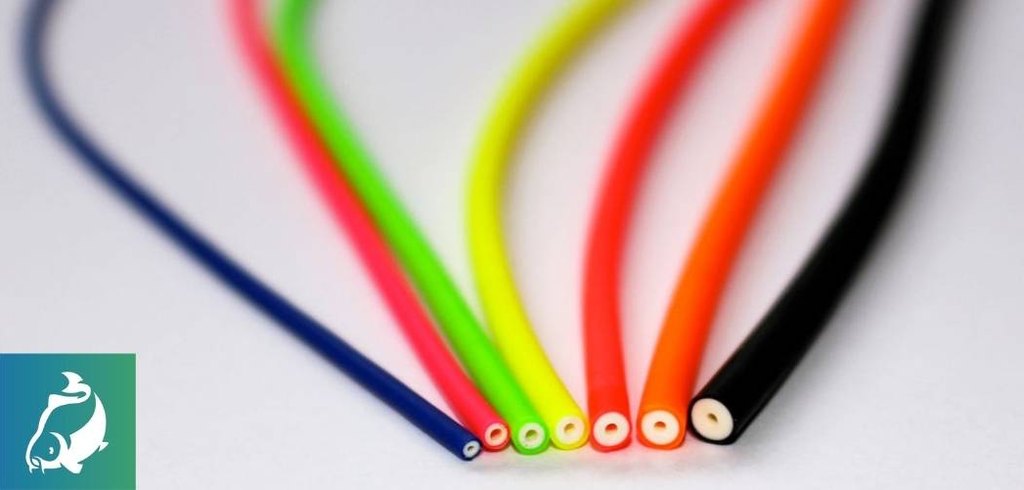
There are generally two times that you need elastic to hold up no matter what.
The first is in your underwear. The second is when you are pole fishing.
As to which is the most annoying when it breaks, we will leave it up to you.
In this article, we are talking pole elastic.
We want to show you some great options for a range of fishing applications and ultimately answer the question of what are the best pole elastics you can buy?
Quick Answer
The Preston Hollo Elastic is my top overall pick because it is a maintenance-free hollow elastic with six honestly rated strengths, giving consistent, trouble-free performance for most carp fishing.
If the budget is tight my starting point would be the Preston Slip Elastic. The table below sorts the elastics by the job they do best, from big-carp power to a cheap solid for silvers.
| Rank | Best for | Elastic | Best suited to |
|---|---|---|---|
| #1 | Best All-Round Hollow | Preston Hollo Elastic | Anglers after one honestly graded hollow that handles most commercial carp. |
| #2 | Top for Big Carp | Matrix Slik Elastic 8m | Anglers elasticating three or four kits at once from a single pack. |
| #3 | Top Power Elastic | Maver Tri-Core Pro Match Elastic | Match anglers bullying big weights of hard-fighting carp on heavy grades. |
| #4 | Great for F1s and Silvers | Maver Dual Core Pro Elastic 5m | Anglers wanting the amber-core softness for silvers, F1s and smaller carp. |
| #5 | Top Hybrid | Preston Dura Slip Hybrid Elastic | Pulla-kit anglers needing low diameter with high, durable stretch. |
| #6 | Great Value | Nytro Flex Elastic 6m | Anglers wanting an all-season hybrid that resists flattening in the cold. |
| #7 | Best Budget | Preston Slip Elastic | Silvers and general anglers wanting a proven solid elastic for lighter work. |
What Are the Different Types of Pole Elastic?
Generally, you'll find two different types of pole elastic. Either solid elastic or hollow elastic. Each type is further subdivided into a range of ratings.
These are normally light, medium and heavy. Each type of pole elastic has different qualities. Here's a quick guide giving key details: -
The different types of pole elastic:
| Elastic Type | Rating Number | How it is Used |
|---|---|---|
| Solid Elastic – Light | #3 - #8 | Used on smaller venues for bag fillers such as roach and skimmers |
| Solid Elastic - Heavy | #8 - #20 | Primarily used for bigger, harder fighting species. Ideal for carp, bream, tench and chub |
| Hollow Elastic – Light | #1 - #5 | Ideal for smaller species, but due to its stretch can often handle larger fish |
| Hollow Elastic – Medium | #6 -#12 | A good all-around elastic for a variety of species. |
| Hollow Elastic - Large | #12 - #20+ | For bigger species. Specimen chub, carp and barbel. |
What Is the Difference Between Solid And Hollow Pole Elastic?
The main difference between solid and hollow pole elastic is how much stretch is available.
Hollow elastics can stretch much further than solid elastics, allowing you to land bigger fish on lighter elastics. Hollow elastic tends to be a little more expensive than solid elastic.
Durability is also a key factor. You'll find that hollow elastic lasts a lot longer when compared to solid elastic.
You'll also find a greater degree of flexibility in hollow pole elastic. Looking at our table above, you'll notice that there is a greater range of ratings for hollow elastic when compared with solid pole elastic.
How Do You Put Elastic on A Fishing Pole?
There are three general methods commonly employed to connect pole elastic to a fishing pole. The three connection types are: -
Dacron Connectors
These connectors are attached with a lasso. They also stop the line wrapping around the end of your pole, which is vital if you want to avoid both breakages and tangles.
Instead of you trawling through information, we thought it would be easier to show you how to do it in real life. Here's a quick 1-minute video telling you everything you need to know: -
Tying a 'Crows Foot'
Crows foot knots are the 'old school' way of tying pole elastic to your pole. It is so named because of the triple ended knot formed as part of the connection. Here's a quick video showing this method: -
Using a Plastic Connector
Plastic connectors are the future of attaching pole elastic. They are really easy to set up and use. They are rapidly becoming the go-to choice, even for match fishermen.
Here's how it is done: -
What Strength Is Pole Elastic?
You'll find that pole elastic 'strength' varies wildly by type and manufacturer. That's not good when you choose the best pole elastic for your given application. To help you out, here is a general rule of thumb…
As a rough guide, you should aim to pick a strength of pole elastic that is double the breaking strain of your rig. So for a 4lb breaking strain, you'll need pole elastic around a #8 rating. For bigger species with a 10lb trace or rig, you'll need #20.
There are a lot of variables involved as to how 'strong' pole elastic is. The pole will also do some work, as will your connectors and how efficient you are at shipping in and out.
How Do I Choose The Right Pole Elastic?
Choosing the right pole elastic depends on the following criteria: -
- The breaking strain of your rig
- The type of pole you have
- Target species
- Connection type
- Skill level
- Budget
Choosing the right pole elastic starts from the hook up. First, consider what you are trying to catch, and pick a corresponding rig or hook length that will allow you to do this.
Then, look at your elastic. Use the above general rule of thumb as a good place to start, and from there, pick an elastic that will offer the necessary stretch and qualities you seek.
Your pole will also play a part. Most poles have a rating attached, giving you details of the correct pole elastic to use.
Why not go as heavy as possible?
Be warned, avoid doing this, and for a very good reason. If you pick an elastic that is too heavy for your pole, you may very well find that your pole gives way and breaks before the elastic does!
How Long Does Pole Elastic Last?
Pole elastic can last as short as one season or several. The truth is that it all depends on how well you treat it and look after it. The most common points of failure tend to be the ends and joins at connectors, so check these before each session.
It is also worth considering using pole elastic lubricant to prevent micro cuts or abrasions that will worsen over time.
Want to know how to maintain your pole? Here's a great article
Can You Double Up Pole Elastic?
While you can double up pole elastic, it is not really recommended.
For a start, while you may double the strength, you decrease the stretch by half. Secondly, you could create an imbalance, which will create a twisting moment. This could damage your pole.
Pole fishing is all about producing consistent results. Doubling up is anything but consistent. Even the best pole elastic isn't particularly expensive, so consider investing in a few different types instead of doubling up.
Is Pole Elastic Colour Coded?
Pole elastic colouring, while following a general standard, isn't universal, and different manufacturers have different ideas for colour coding.
However, there is a general convention that you'll see most manufacturers use. It looks a little like this: -
| Colour | Rating (approximately) | Strength |
|---|---|---|
| Yellow | 3 – 5 | light |
| Pink/Purple | 4 – 6 | Light-medium |
| Blue | 5 – 8 | Medium |
| White | 6 – 10 | Medium -heavy |
| Grey | 10 – 14 | Heavy |
| Black | 12+ | Specimen |
The Best Pole Elastics Reviewed
Preston Hollo Elastic
#1 Best All-Round Hollow

Preston's name for high quality yet affordable pole gear is why the Hollo is the elastic I'd steer most anglers to first. It's middle of the road in the best sense: consistent, trouble-free performance that just works.
It's offered in six strengths, from a delicate 9H up to a very powerful 19H, and what I rate most is how honestly Preston grade them. A 13H sits neatly between 12 and 14 in normal elastic terms, so picking the right grade is straightforward rather than guesswork.
A special manufacturing process means it never needs lubricant injected inside it, so it's genuinely maintenance-free. Each 3m length arrives in a sealed bag that keeps it in perfect condition until it goes on the pole.
The one catch is that with the larger diameters, over size 10, the pole tip needs cutting back or the number one section removing so the elastic runs smoothly. Do that and it's a superb all-round hollow that won't break the bank.
Best suited to
Anglers after one honestly graded hollow that handles most commercial carp.
Pros
- Six honest strengths from 9H to 19H
- Maintenance-free, no lubricant needed
- Consistent, trouble-free performance
Cons
- Larger sizes need the tip cutting back
- Not the cheapest solid option
Matrix Slik Elastic 8m
#2 Top for Big Carp

Running more than one kit is where this 8m pack of Matrix Slik makes sense, and it's a market-leading hollow that has earned that status.
The longer length is the whole point. One pack elasticates three standard match or power kits at 2.6m, or four short kits at 1.8m, so it works out far better value than buying single 3m lengths when a few kits need doing.
It's made exclusively for Matrix in Italy and comes in seven sizes, from a fine 6-8 at 1.2mm up to a serious 18-20 at 2.4mm, so it spans everything from silvers to the biggest commercial carp.
Being hollow, it gives the long, cushioning stretch that keeps hooks in through a hectic fight. For anyone setting up a bank of kits for big fish, the Slik in this 8m pack is hard to beat.
Best suited to
Anglers elasticating three or four kits at once from a single pack.
Pros
- One 8m pack does three power kits
- Seven sizes, 1.2mm to 2.4mm
- Proven market-leading hollow
Cons
- Only worth it if elasticating several kits
- Premium price per pack
Maver Tri-Core Pro Match Elastic
#3 Top Power Elastic

For sheer bullying power, nothing else in this guide matches the Maver Tri-Core Pro. It's built around an innovative triple-core hollow system that gives unbelievable strength and puts the angler firmly in charge of the fish.
That triple-core construction is what sets it apart from a traditional single hollow. It delivers far more controlled power, exactly what a match angler needs to build a huge winning weight of carp quickly rather than playing every fish to a standstill.
It's tough and durable, and comes in four heavy grades, colour coded from 12-14 in yellow through to 20-plus in blue, so there's a rating for any big-fish situation. The 5m length elasticates two power kits, with a 2.5m option for a single kit.
It's aimed squarely at power fishing, so it's far more elastic than a silvers angler will ever need. For big-carp match work, though, it's a genuine step up in control.
Best suited to
Match anglers bullying big weights of hard-fighting carp on heavy grades.
Pros
- Triple-core hollow, huge controlled power
- Four heavy grades, colour coded
- 5m does two power kits
Cons
- Overkill for silvers or F1s
- Heavy grades only
Maver Dual Core Pro Elastic 5m
#4 Great for F1s and Silvers

Where the Tri-Core bullies, the Dual Core Pro flatters, and for mixed silvers and F1 fishing it's the Maver I'd reach for over its heavier stablemate.
It uses a twin-core hollow system with an amber inner core, and that inner core is the clever bit. It vastly improves the elasticity and widens the range of jobs each grade can handle, so a single rating covers more situations than a traditional hollow.
The result is a softer, more forgiving fish-playing action that suits smaller fish and hit-and-hold F1 work without ripping hooks out, while still holding reserves for a better stamp of carp.
The range runs across seven colour-coded grades, from a fine 3-5 white up to an 18-20 blaze orange, and the 5m length does two kits. It's a versatile elastic that quietly makes the angler look good.
Best suited to
Anglers wanting the amber-core softness for silvers, F1s and smaller carp.
Pros
- Amber inner core, wide grade range
- Forgiving action for silvers and F1s
- 5m does two kits
Cons
- Softer than a dedicated power elastic
- Not the cheapest here
Preston Dura Slip Hybrid Elastic
#5 Top Hybrid

Low diameter with high stretch is a rare combination, and the Dura Slip Hybrid manages both by borrowing the best of solid and hollow elastics. It carries over from the guide's original line-up and still earns its place.
That super-stretchy design is also incredibly durable, which makes it ideal for modern angling where pulla kits and pulla bushes pile constant, extreme strain on the elastic. It's been developed specifically to withstand that punishment.
Each 3m length is supplied pre-soaked in lubricant, so it performs at the highest level straight from the packet with no faffing. The eight grades each come in a different fluorescent colour, so it's easy to identify and genuinely versatile.
With sizes from a fine 5 up to a strong 19, it'll fish for silvers on natural venues or target big summer carp just as happily. As a do-it-all hybrid that stays kind on the wallet, it's excellent.
Best suited to
Pulla-kit anglers needing low diameter with high, durable stretch.
Pros
- Low diameter with high stretch
- Built for pulla kits and bushes
- Pre-soaked, eight fluorescent grades
Cons
- 3m lengths, one kit per pack
- Hybrid feel divides opinion
Nytro Flex Elastic 6m
#6 Great Value

Cold weather is where plenty of elastics flatten off and lose their zip, and resisting exactly that is the Nytro Flex's calling card. It's a hybrid that blends the best of hollow and solid into one versatile product.
It offers exceptional stretch, comparable to a traditional hollow, alongside the slim, smooth profile of a solid. That combination is what lets one elastic cover so much ground.
The robust construction is engineered to handle the extra friction of puller kits, and it copes with everything from silvers and F1s up to larger carp. One spool genuinely does a lot of jobs.
Each colour-coded model comes in a generous six-metre length and includes two free Dacron connectors, so it's ready to fish out of the packet. For the outlay, that's a lot of versatile elastic.
Best suited to
Anglers wanting an all-season hybrid that resists flattening in the cold.
Pros
- Hybrid stretch and smoothness
- Resists flattening in the cold
- Six metres plus two free connectors
Cons
- Jack of all trades, master of none
- Colour range less familiar than Preston
Preston Slip Elastic
#7 Best Budget

Few elastics carry the history of the Preston Slip. It was the first colour-coded elastic ever sold, and it's stayed incredibly popular for good reason ever since.
As a solid elastic it keeps things simple and reliable, and it comes pre-treated with Preston Slip lubricant for outstanding abrasion resistance. That means it lasts well and runs smoothly without any extra maintenance.
It's supplied in generous five-metre lengths and spans a wide band of strengths, from an ultra-fine size 2 for the smallest silvers up to a powerful size 16, so there's a grade for most jobs short of the biggest carp.
It doesn't have the long, cushioning stretch of a hollow, so serious carp anglers are better off higher up the guide. As a dependable elastic for silvers and general fishing, though, nothing touches it for the money.
Best suited to
Silvers and general anglers wanting a proven solid elastic for lighter work.
Pros
- The original colour-coded elastic
- Pre-treated, great abrasion resistance
- Cheapest elastic in the guide
Cons
- Solid, less stretch than hollow
- Not for the biggest carp
Pole Elastic FAQs
Still choosing an elastic?
These are the questions I would settle before buying.
What strength pole elastic is needed?
It depends on the fish. Fine grades around 4 to 8 suit silvers and small F1s, mid grades of 10 to 14 cover general carp on commercials, and heavy 16 to 20-plus elastics like the Maver Tri-Core are for bullying big carp quickly. Matching the grade to the target stamp of fish is the single most important choice.
What is the difference between solid and hollow pole elastic?
Solid elastic, like the Preston Slip, is a simple round strand: cheap, reliable and best for lighter fishing. Hollow elastic, like the Preston Hollo or Matrix Slik, is a tube that gives a longer, more cushioning stretch, which absorbs lunges from bigger fish and keeps hooks in. Hybrids such as the Nytro Flex sit between the two.
Does pole elastic need lubricant?
Some does, some does not. The Preston Hollo needs no internal lubricant thanks to its manufacturing process, and the Dura Slip Hybrid and Slip come pre-treated. A dedicated pole lube still helps any elastic run smoothly through the bushes and prolongs its life, especially in the heat.
How long does pole elastic last?
A season of regular use is a fair guide, though it varies with how hard it is worked and how much sun it sees. Elastic perishes with UV and constant strain, so it pays to check it for nicks and flat spots before a big match. Durable options like the Dura Slip Hybrid are built to last longer under pulla-kit strain.
Final Thoughts
When reading about pole elastics, you'll probably have discovered an almost scientific quality to them.
In fact, when it comes to the 'best' pole elastics, it is often a matter of highly contested debate.
All in the above list are worth your time, so find one that suits you and give it a go. If you are in need of new pole, we have a great article on fishing poles that won't break the bank right here.
Thanks for reading.
Related Articles...

Best Pole Rollers
In this article, we will talk you through the best pole rollers and even show you some great suggestions to suit all budgets.

5 Best fishing poles under £500
In this article we are going to have a quick run through what pole fishing is all about and give you some suggestions on the best fishing poles under £500 today.

6 Best Fishing Poles for Beginners
This article seeks to provide some clarity on the basics of a fishing pole and the different types available in order to help decide on the best fishing poles for beginners.